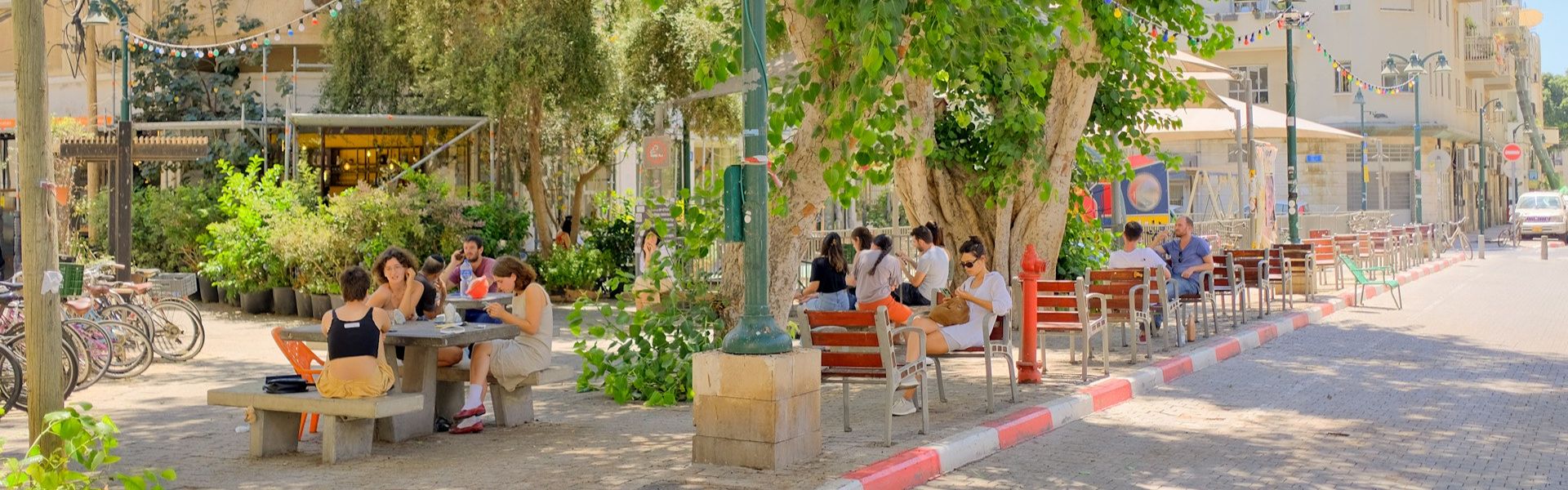
Neve Tzedek is Tel Aviv’s oldest neighborhood: founded in 1887, it was the first Jewish neighborhood built outside the walls of Jaffa, 22 years before Tel Aviv itself. Its lanes lead straight onto Rothschild Boulevard, where the city was born and where Israel’s independence was declared. Together they make the best half-day walk in Tel Aviv, roughly 3.5–4 km on flat ground, and three of its highlights are covered by the Tel Aviv City Card.
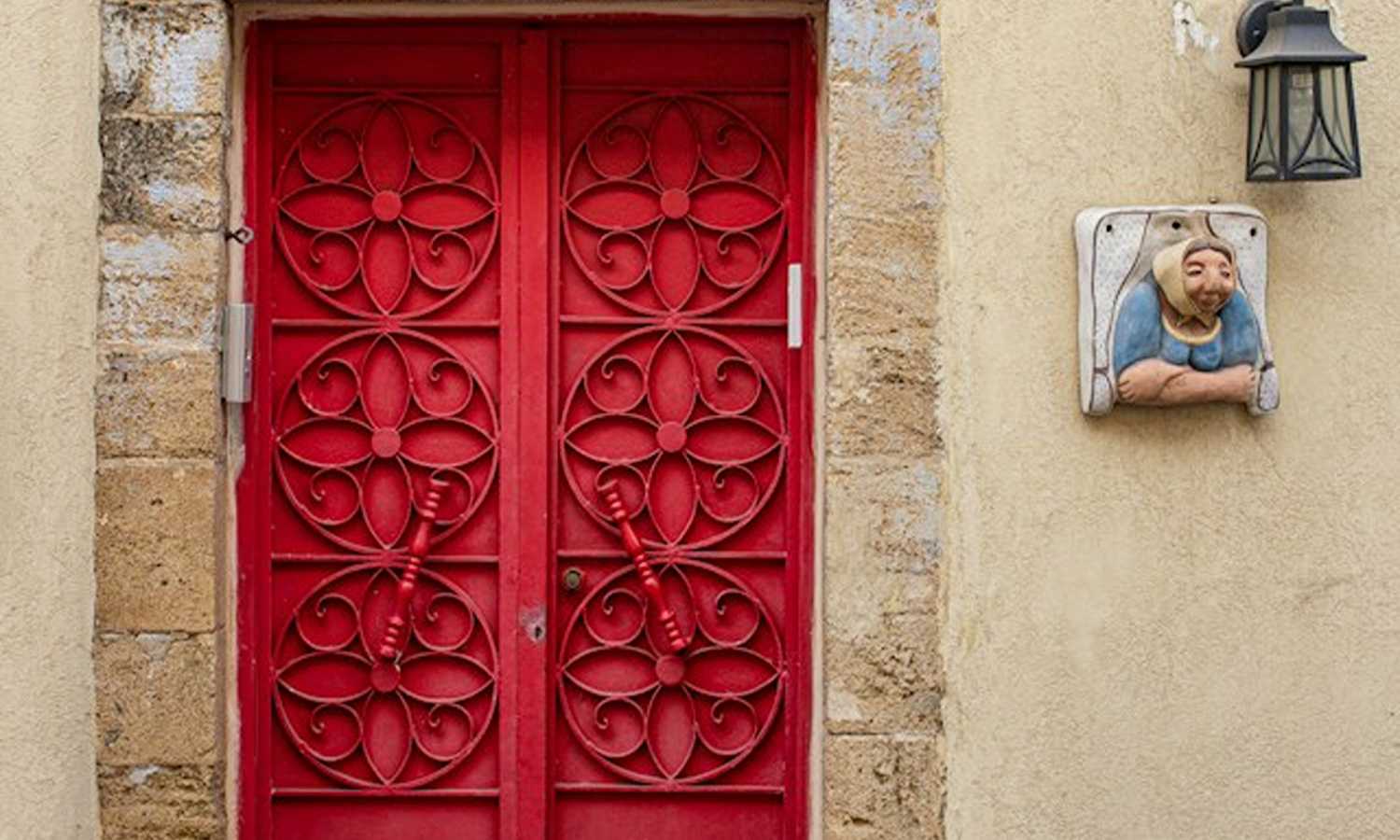
Neve Tzedek and Rothschild Boulevard at a glance
- Where: Southwest Tel Aviv, between the beach promenade and the start of Rothschild Boulevard.
- Time needed: 3–5 hours, including one museum and a coffee stop.
- Distance: About 2.3 km around Neve Tzedek, plus 1.5–2 km along Rothschild Boulevard into the White City.
- Best time: Morning or late afternoon. Summer middays are hot, and the boulevard’s shade trees help.
- Included with the Tel Aviv City Card: Nahum Gutman Museum of Art, the Independence Trail interactive guide.
Why walk Neve Tzedek and Rothschild together?
The two areas tell one continuous story. Neve Tzedek shows how families left crowded Jaffa in the 1880s and built low houses with tiled roofs and narrow lanes. Rothschild Boulevard shows the next chapter: in 1909 the founders of Tel Aviv laid out a modern garden city on the sand dunes, and in the 1930s architects filled it with the white Bauhaus buildings that earned Tel Aviv its UNESCO World Heritage listing as the “White City.” Walking from one to the other takes you through about 60 years of history in an afternoon.
The route, stop by stop
1. HaTachana (the Old Jaffa Railway Station)
Start at HaTachana, the restored station of the first railway in the region, which opened in 1892. Today the compound has cafés, design shops and public restrooms, and its paid parking lot is the easiest place to leave a car. Getting here by public transport? Our Tel Aviv light rail guide and public transportation guide explain the options.
2. Shabazi Street
Cross into the neighborhood and walk up Shabazi Street, Neve Tzedek’s main lane. It is lined with restored houses, small boutiques, galleries and some of the city’s best-known cafés. Look north for the contrast between the old rooftops and Tel Aviv’s modern towers.
3. Suzanne Dellal Centre for Dance and Theatre
A few steps away is the Suzanne Dellal Centre, opened in 1989 in restored school buildings and home to the Batsheva Dance Company. Even when there is no performance, its orange-tree courtyard is one of the most photographed spots in Tel Aviv.
4. Rokach House
Rokach House was built in 1887 for Shimon Rokach, one of Neve Tzedek’s founders. The historic building was later restored by his granddaughter, the artist Lea Majaro Mintz, and remains an important part of the neighborhood’s architectural heritage.
5. Nahum Gutman Museum of Art (included with the card)
On Shimon Rokach Street, the Nahum Gutman Museum of Art is set in one of the neighborhood’s original buildings, a few minutes from where the painter, illustrator and children’s author grew up. Gutman’s colorful work documents the early years of Tel Aviv, so it is the perfect place to understand the streets you are walking. Entry is included in the Tel Aviv City Card; show the QR code from your confirmation email at the entrance.
6. Rothschild Boulevard and the Independence Trail (included with the card)
Rothschild Boulevard begins at the edge of Neve Tzedek. Its shaded central walkway, with kiosks, benches and bike paths, is where the city’s founders built the first houses in 1909. The Independence Trail follows this story through stops such as the first kiosk, the Founders Monument, the Great Synagogue, the Haganah Museum and Independence Hall at 16 Rothschild, where David Ben-Gurion declared the State of Israel on May 14, 1948. The trail’s interactive guide is included with the Tel Aviv City Card.
Tip: Independence Hall has been closed for a long renovation. Check its current status before your visit; the trail itself is outdoors and can be walked any day.
7. The White City and Liebling Haus (free entry)
Continue north along the boulevard to see Tel Aviv’s Bauhaus architecture: rounded balconies, horizontal windows and white facades built mostly in the 1930s. Turn off to Idelson Street for Liebling Haus, a restored 1930s Bauhaus building that is now a center for urbanism, architecture and conservation.
Turn the walk into a 72-hour Tel Aviv plan
The Tel Aviv City Card is valid for 72 hours from the start date you choose, so this walk can be day one of a three-day cultural plan:
- Day 1: Neve Tzedek, the Nahum Gutman Museum, Rothschild Boulevard, the Independence Trail (The Independence Trail is free to walk, while the Tel Aviv City Card includes an interactive guided experience), and Liebling Haus.
- Day 2: The Tel Aviv Museum of Art in the morning, then the Ilana Goor Museum in Old Jaffa for sunset over the sea.
- Day 3: North Tel Aviv: ANU – Museum of the Jewish People, the Steinhardt Museum of Natural History and the Eretz Israel Museum.
The card currently costs 99 NIS, against a listed regular price of 298 NIS, and covers six museums plus the Independence Trail, with free entries and discounts on top. Read more in our practical guide to Tel Aviv museums.
Staying connected on the walk: Card holders get a 22% discount on an eSIM for Israel. The coupon code arrives in the card’s confirmation email, so maps and your QR code work from the moment you land.
Practical tips for visiting Neve Tzedek
- Opening hours: Museum opening hours vary, and some museums close on Sundays or other days of the week. Friday hours are often shorter, so check each venue’s official website before visiting.
- Shabbat: From Friday afternoon to Saturday evening some shops close, but the neighborhood stays lively and the outdoor sites are always open.
- Shoes and water: The lanes are flat but partly cobbled. Carry water from April to October.
- Coffee and dessert: Shabazi Street and HaTachana have plenty of options for a break between stops.
- Combine with the beach: The promenade is a short walk west of HaTachana, so you can end the day with sunset at the sea.
Frequently asked questions
Is Neve Tzedek worth visiting?
Yes. Neve Tzedek is Tel Aviv’s oldest neighborhood (1887), and its restored houses, boutiques, galleries and the Suzanne Dellal Centre make it one of the most charming areas in the city. It is also next to the beach and to Rothschild Boulevard.
How long does it take to walk Neve Tzedek and Rothschild Boulevard?
Plan 3–5 hours for about 3.5–4 km, including one museum visit and a coffee stop. The Neve Tzedek loop alone is about 2.3 km.
Can you walk from Neve Tzedek to Rothschild Boulevard?
Yes. Rothschild Boulevard begins at the edge of Neve Tzedek, so you can walk straight from one to the other.
What is included in the Tel Aviv City Card on this route?
The Nahum Gutman Museum of Art and the Independence Trail are included, and Liebling Haus is free with the card. The card also includes five more museums across the city and is valid for 72 hours.
Why is Tel Aviv called the White City?
Thousands of white Bauhaus-style buildings were built in central Tel Aviv, mostly in the 1930s. UNESCO listed the White City as a World Heritage Site in 2003, and Rothschild Boulevard runs through its heart.
Ready to explore? Get your Tel Aviv City Card. It is delivered by email in two steps, with one QR code for every attraction on this walk.